GYN CANCERS ALLIANCE
GYNCA (GYN Cancers Alliance) helps Southwest Missouri women fighting gynecologic cancer by providing gas cards, rent help, wig fittings, therapy, and a support group that laughs more than you’d expect. Its old identity was dated and hard to use across applications, and it didn’t reflect how the organization works today. Revel started with research and a messaging strategy that landed on a key principle: Treatment handles the cancer. GYNCA handles everything else. The new mark is wordplay and a powerful message, with one petal of a flower turned into an exclamation point, because this kind of support can’t wait.
WHAT WE DID
- Logo Development
- Messaging Strategy
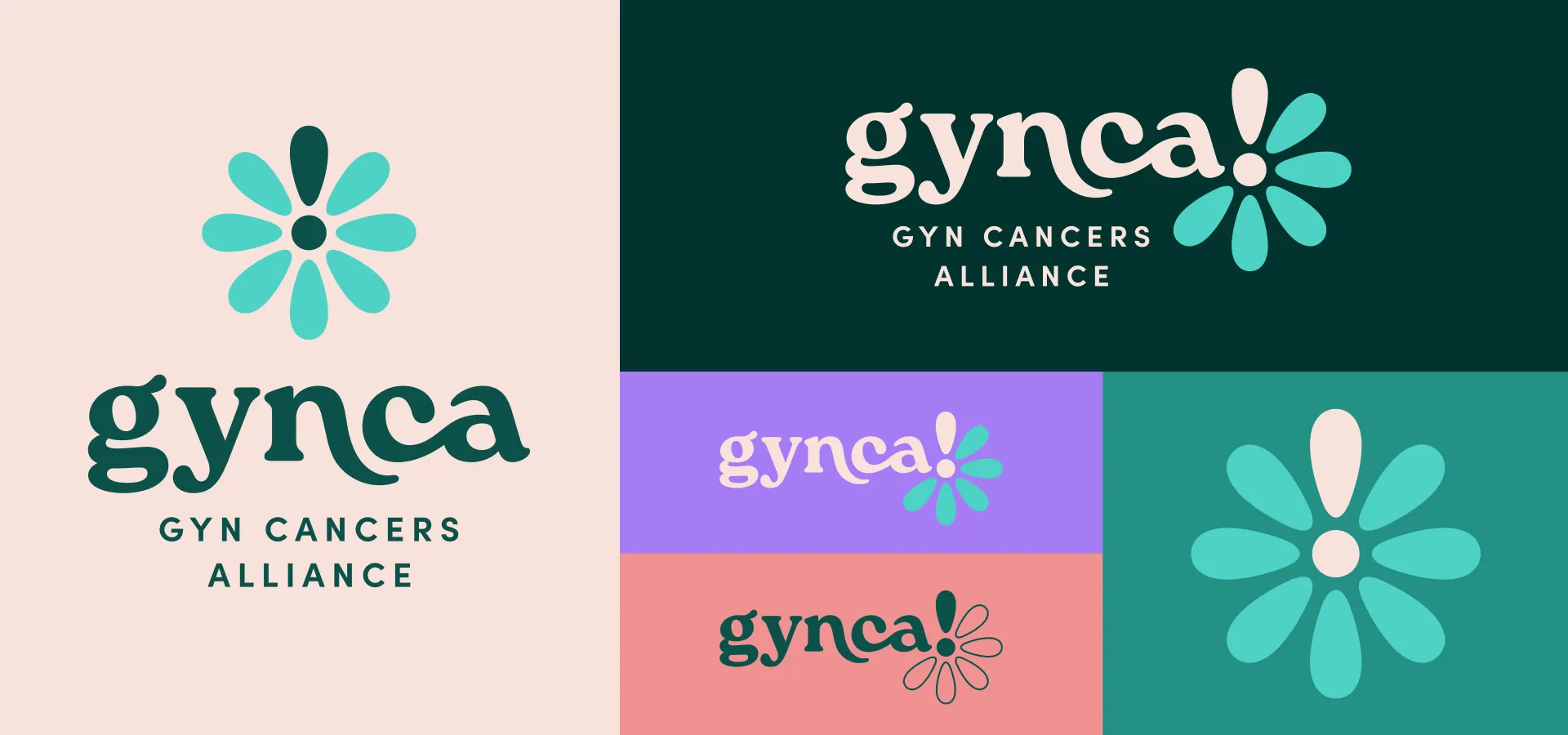
The visual language has to work in environments ranging from online posts to support group rooms to college campuses, so we paired a soft shape with a firm point of view. Roca sets the headlines. It’s approachable and a little curvy, with enough personality to keep things from feeling clinical. Poppins handles everything that needs to be read clearly the first time. The palette is anchored in GYNCA’s teal, which gives the organization a recognizable color associated with GYN cancers.


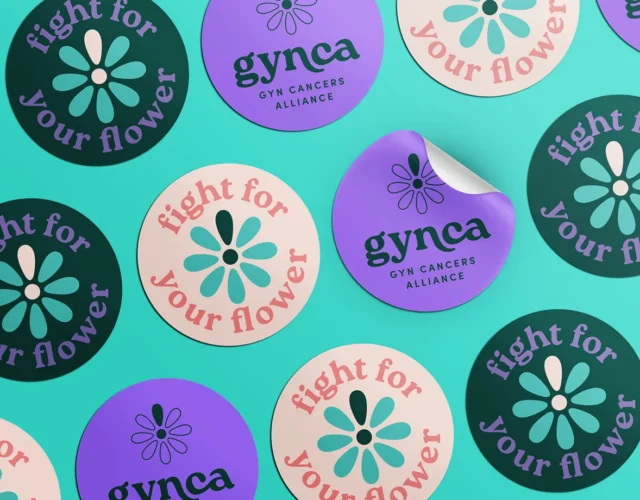
Then we gave the flower more room to blossom. Its petals became a repeating pattern for backgrounds, so the brand is recognizable even when the logo doesn’t, and gets a visual boost when needed. The mark stays recognizable, and the pattern does the work of a mascot.


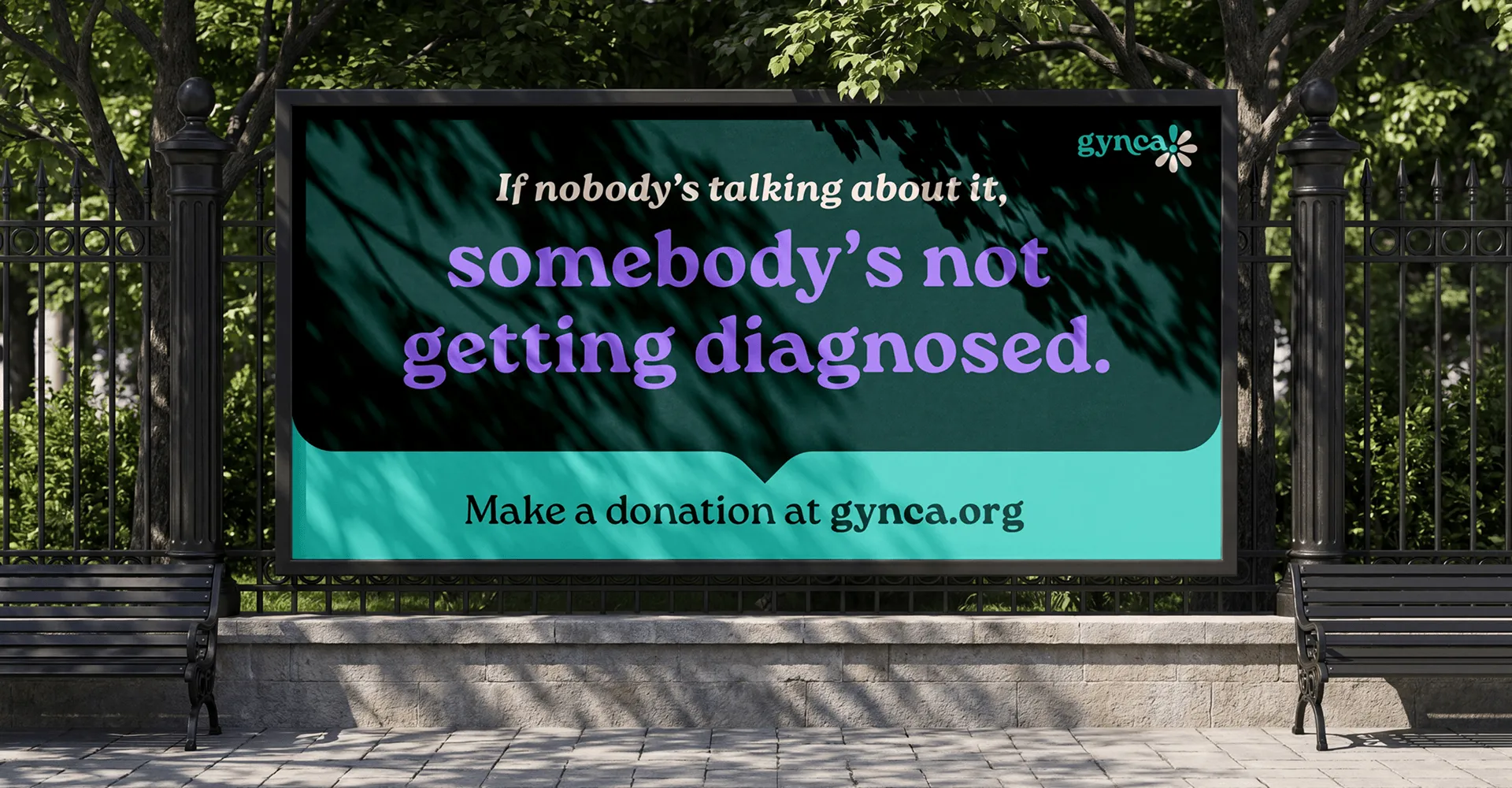
We developed iterations of the identity for where women were more likely to see it: Facebook and Instagram content, a bus bench, a mousepad, and more. It’s critical that women recognize and remember Gynca because when someone Googles a symptom at 2 a.m. or is trying to figure out how to make her appointments, they need to know Gynca is there to help.
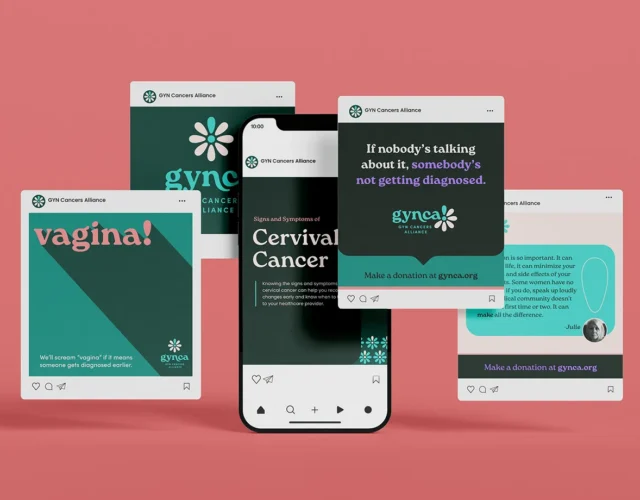

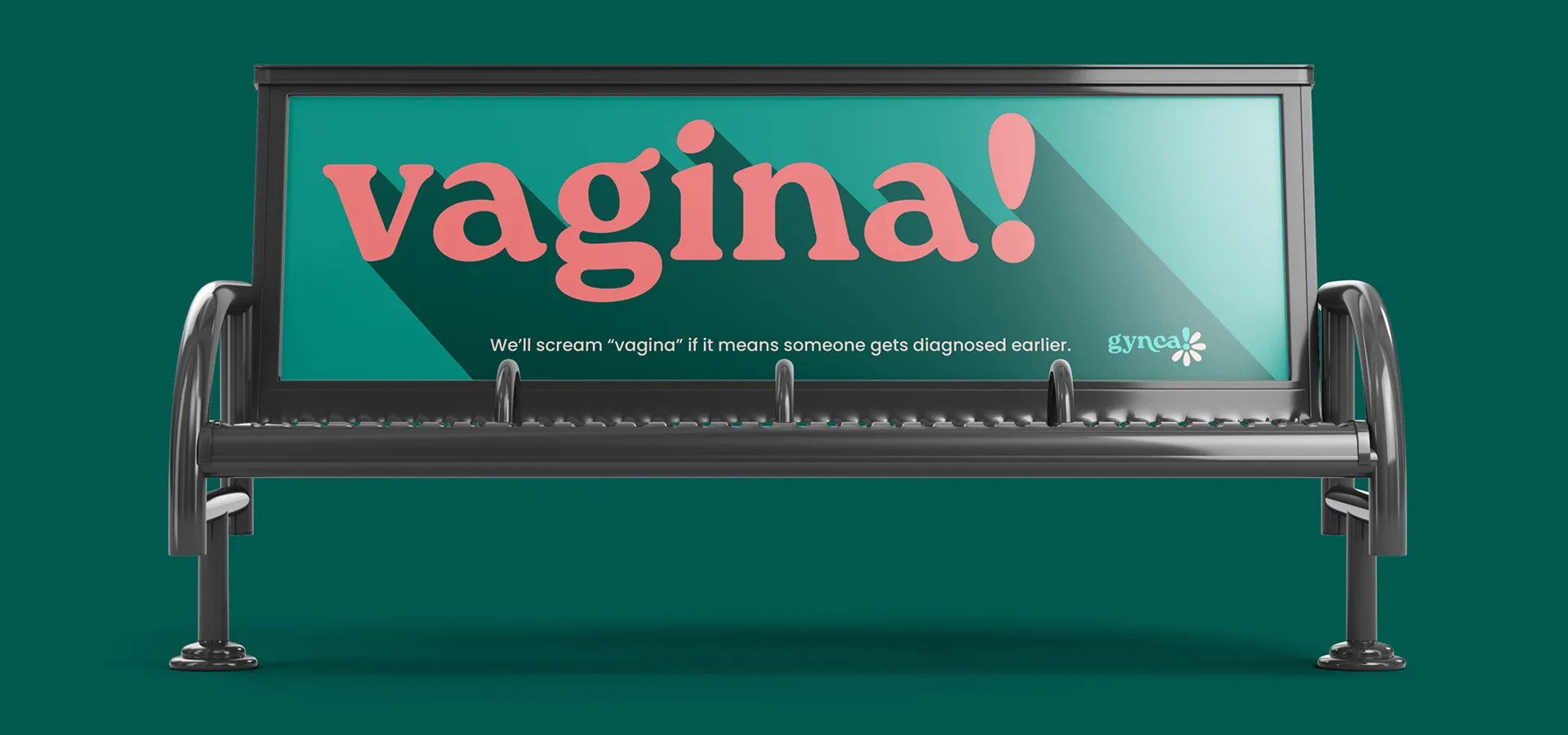
GYNCA’s brand principle is to be lighter than people expect, especially with younger audiences who are still learning what to watch for. So we gave prevention a vocabulary people would actually repeat: Fight for your flower. Advocate for your vajayjay. Show up for your cervix. Put your foot down for your downstairs. Make some noise for your nether regions. If more women are willing to talk about it, more women will speak with their doctors, more women will get treatment, and more women will survive.